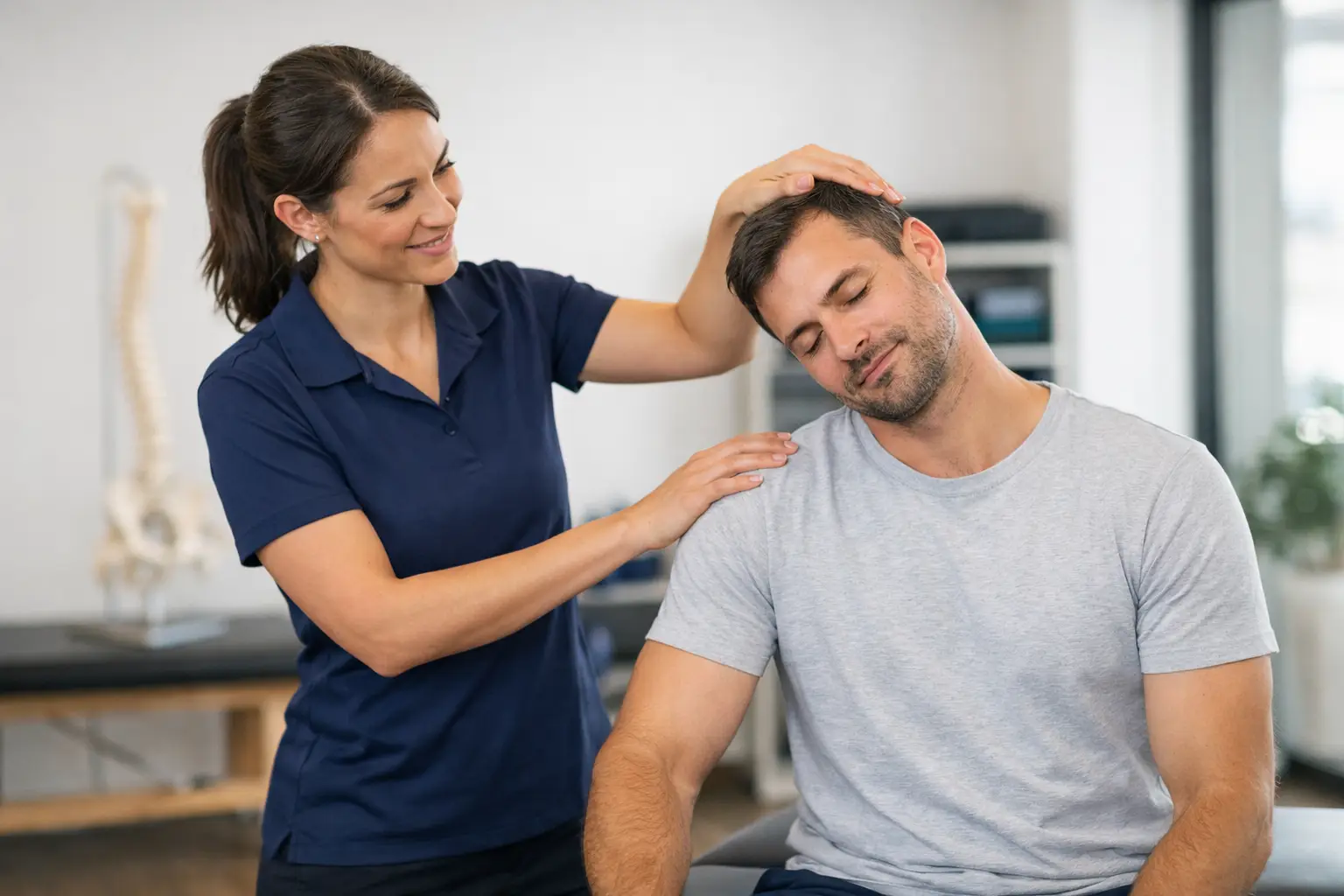
A stiff neck can turn a normal morning into a problem before you have even left the house. Checking a blind spot while driving, looking down at your phone, pressing overhead at the gym, or sleeping in an awkward position can suddenly feel limited. The best stretches for stiff neck symptoms can help when used well, but stretching harder is not always the answer - especially if your neck keeps tightening up or pain is starting to interfere with work, training, or sleep.
Neck stiffness is a common pain presentation, not a diagnosis on its own. It can develop after an irritated joint, a muscle strain, a long day at a desk, a change in training volume, or a flare-up of a recurring neck problem. The goal is not to force your neck into its furthest possible range. It is to settle symptoms, restore comfortable movement, and build enough capacity that normal life stops provoking the same issue.
What a stiff neck can feel like
Most people describe stiffness as a tight, blocked, or pulling feeling through one side of the neck, often near the base of the skull, upper trapezius, or between the shoulder blades. Turning your head may feel restricted, and some people notice a dull ache after sitting, driving, lifting, or sleeping.
A stiff neck may also come with muscle guarding. This is the body’s protective response to irritation, and it can make the area feel hard or tender. That does not automatically mean there is a serious injury or that something is “out of place.” It does mean the area may currently be sensitive and less tolerant of certain positions or loads.
For some people, neck pain also refers into the shoulder blade or upper back. If symptoms travel down the arm, include tingling or numbness, or involve noticeable weakness, the situation needs a more careful assessment than a stretch routine alone can provide.
Why neck stiffness keeps coming back
Sometimes the trigger is obvious: an awkward sleep position, a minor strain, a sudden increase in lifting, a long drive, or hours spent in one position during a deadline. Other times, the cause is less clear. Stiffness can build when neck and upper-back muscles are repeatedly asked to work without enough movement variation, recovery, or strength capacity.
The common mistake is blaming one posture. No single posture is inherently harmful, and sitting upright all day is neither realistic nor necessary. The bigger issue is often staying in any one position for too long, then asking the neck to handle a demanding task it has not recently tolerated well.
Training can also play a role. Heavy carries, shrugs, deadlifts, overhead pressing, contact sport, cycling positions, and high-volume desk work all load the neck and upper back differently. A movement is not automatically bad because it brings on symptoms. It may simply need to be modified, reintroduced gradually, or supported with better overall strength and mobility.
The best stretches for stiff neck symptoms
Stretches should feel like a mild to moderate pull, not sharp pain, burning, dizziness, or symptoms shooting into the arm. Move slowly, breathe normally, and avoid trying to “crack” or force the neck. Two or three short sessions through the day are often more useful than one aggressive session.
Gentle neck rotation
Sit or stand tall enough that you are not slumped, then slowly turn your head to the right as far as is comfortable. Pause for five to 10 seconds, return to centre, and repeat to the left. Complete five to eight repetitions per side.
This is often one of the most useful starting movements because turning is frequently the motion people notice first when backing out of a parking space or looking over a shoulder. Keep the range comfortable. If one direction is substantially more limited, do not force it - repeated easy exposure is usually more productive than trying to push through a block.
Chin tuck with neck lengthening
Look straight ahead and gently glide your chin backward, as though making a small double chin. Do not tip your head down or brace aggressively through the jaw. Hold for three to five seconds, then relax. Try six to 10 repetitions.
This is not about holding a rigid posture. It is a controlled way to explore neck movement and recruit the deeper muscles that help manage head and neck position. It can be particularly useful after prolonged computer work or driving, when the neck feels compressed and tired.
Upper trapezius side bend
Keep one shoulder relaxed and slowly bring your opposite ear toward that shoulder. For example, to stretch the right side, let the left ear move toward the left shoulder while the right shoulder stays heavy. Hold for 15 to 20 seconds, then repeat one or two times per side.
Do not pull your head down with your hand. That usually turns a gentle stretch into an unnecessary battle. If the side bend causes a pinch on one side of the neck, reduce the range or skip it for now.
Levator scapulae stretch
This stretch targets the muscle that runs from the upper inside corner of the shoulder blade toward the neck. Turn your head about 45 degrees to the left, then gently look down toward your left armpit. You should feel a mild pull along the right side or back of the neck. Hold for 15 to 20 seconds before switching sides.
This can feel helpful when the neck is sore near the shoulder blade after computer work, carrying a bag, or sleeping awkwardly. As with every stretch, it should ease symptoms or leave them unchanged. If it makes pain worse for hours afterward, it is not the right dose yet.
Upper-back extension over a chair
A stiff neck does not always need more neck movement. Sometimes improving upper-back movement reduces how much the neck has to compensate. Sit against the back of a sturdy chair, place your hands behind your head, and gently extend your upper back over the chair back while keeping your low back relatively still. Perform six to eight slow repetitions.
This is often more useful than repeatedly stretching the same sore spot, particularly for people whose symptoms are worse after sitting. It also gives you a way to change position without turning the day into a posture-correction project.
When stretching is not enough
A short-lived stiff neck that improves over several days can often be managed with gentle movement, normal activity within tolerance, and temporary modifications to aggravating tasks. But recurring stiffness, significant pain, or ongoing loss of motion deserves more than a generic online routine.
Have your neck assessed promptly if you have pain spreading down an arm, numbness or tingling, weakness in the arm or hand, severe headache with neck pain, dizziness, balance changes, fever, unexplained weight loss, or symptoms following a significant fall, collision, or other trauma. These symptoms do not confirm one particular problem, but they change the clinical picture and should not be managed by stretching alone.
You should also book an assessment if neck stiffness persists beyond a couple of weeks, repeatedly flares with work or training, or causes you to avoid activities you want to do. Rest may calm an irritated neck in the short term, but it does not always rebuild confidence or capacity for the tasks that caused the problem.
How stiff neck pain is assessed and treated
A useful assessment looks beyond where the pain is felt. At Ground Up Rehab, this may include your neck and upper-back range of motion, neurological screening when appropriate, shoulder function, training history, work demands, and the specific movements that bring symptoms on. The aim is to identify a practical starting point, not to label every stiff neck with a dramatic diagnosis.
Hands-on treatment may be useful when pain and guarding are limiting movement. Depending on the presentation, this can include joint mobilization or manipulation when appropriate, deep soft tissue therapy, or instrument-assisted soft tissue work. These options can help create a window for more comfortable movement, but they are not the whole plan.
Rehabilitation should then build on that window. Early work may include controlled neck and upper-back mobility, followed by endurance exercises for the neck, shoulder blades, and upper back. From there, progressive loading can prepare you for desk work, lifting, overhead training, carrying, sport, or the demands of a physical job. The right plan depends on what your neck needs to return to, not just what feels good on the treatment table.
A stiff neck should not keep shrinking your routine. If these symptoms sound familiar, book an assessment in Hamilton and get a clear plan to move comfortably, rebuild strength, and return to the activities that matter to you.
